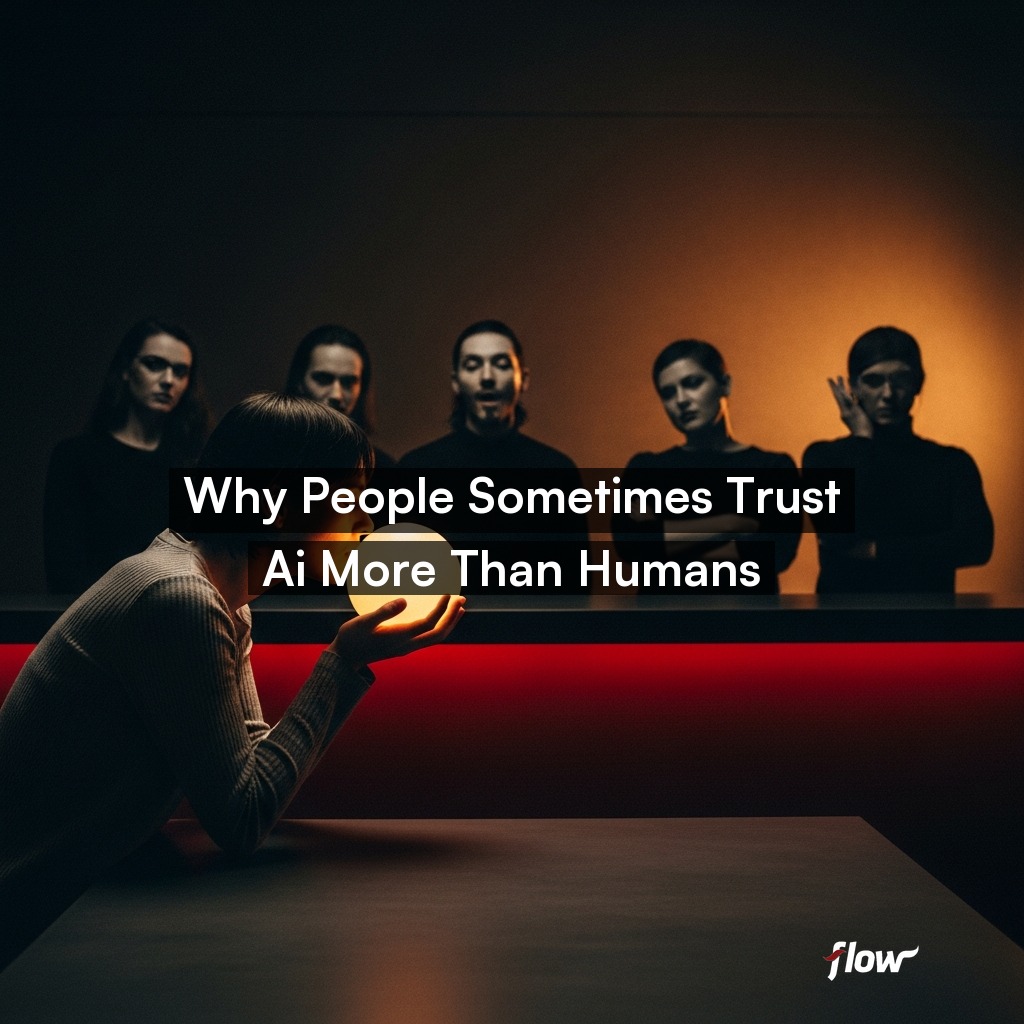
People often trust AI for one simple reason: it feels less judgmental
That’s the part most executives miss. The trust gap is not always about accuracy. It’s often about emotion. When someone feels embarrassed, uncertain, or afraid of sounding uninformed, an AI system can feel safer than a manager, advisor, or even a peer.
That matters more than it sounds. If employees, customers, or partners are more willing to be honest with a machine than with your team, you have both an opportunity and a problem.
The real problem
Humans carry social cost. Asking a “dumb” question, admitting confusion, or revealing a weak spot can feel risky. AI removes some of that friction. No eye-roll. No status game. No memory of your bad question in next week’s meeting.
That’s why people sometimes open up faster to AI tools in areas like coaching, mental health support, budgeting, training, and customer service. The appeal is not magic. It’s emotional safety paired with instant response.
But there’s a catch: people can over-trust what feels safe. A calm, confident AI response can be wrong. If your business mistakes emotional comfort for reliability, you create a new kind of operational risk.
A real use case for business
Picture a 300-person company rolling out an internal AI assistant for HR, finance, and operations questions. Employees use it to ask about expense policies, performance review prep, benefits, and workflow issues they’d never ask a director directly.
That creates clear upside:
- More questions asked, which means fewer hidden mistakes
- Faster support without increasing headcount
- Better data on what people are actually confused about
- Lower friction in onboarding and policy adoption
Now the risk side. If that assistant gives one bad reimbursement answer or misstates a policy, trust breaks fast. Worse, employees may act on it because the tool sounded certain.
The lesson is simple: AI can outperform humans in approachability while still needing strong controls in accuracy, escalation, and auditability.
What smart leaders should do now
If you’re a CFO or owner, don’t frame AI adoption as only a productivity play. It’s also a trust design decision. The best AI systems win because they make people feel safe enough to engage.
- Deploy AI where people hesitate to ask humans
- Use guardrails for policy, finance, and compliance answers
- Track repeated questions to spot hidden process failures
- Build clear escalation paths when confidence is low or stakes are high
Concrete takeaway: treat AI as a front line for emotionally difficult questions, not as a blind replacement for human judgment. The companies that win will be the ones that pair machine approachability with human accountability.
As pessoas muitas vezes confiam na IA por um motivo simples: ela parece menos julgadora
Essa é a parte que muitos executivos não percebem. A diferença de confiança nem sempre está na precisão. Muitas vezes está na emoção. Quando alguém se sente envergonhado, inseguro ou com medo de parecer mal informado, um sistema de IA pode parecer mais seguro do que um gestor, consultor ou até um colega.
Isso importa mais do que parece. Se funcionários, clientes ou parceiros estão mais dispostos a serem honestos com uma máquina do que com sua equipe, você tem ao mesmo tempo uma oportunidade e um problema.
O problema real
Humanos trazem custo social. Fazer uma pergunta “boba”, admitir confusão ou revelar uma fraqueza pode parecer arriscado. A IA remove parte desse atrito. Sem revirar os olhos. Sem jogo de status. Sem lembrar da sua pergunta ruim na reunião da semana seguinte.
É por isso que, às vezes, as pessoas se abrem mais rápido para ferramentas de IA em áreas como coaching, apoio à saúde mental, orçamento, treinamento e atendimento ao cliente. O apelo não é magia. É segurança emocional com resposta instantânea.
Mas existe um risco: as pessoas podem confiar demais no que parece seguro. Uma resposta calma e confiante da IA pode estar errada. Se sua empresa confundir conforto emocional com confiabilidade, você cria um novo tipo de risco operacional.
Um caso de uso real nos negócios
Imagine uma empresa com 300 funcionários implementando um assistente interno de IA para dúvidas de RH, finanças e operações. Os colaboradores usam a ferramenta para perguntar sobre política de despesas, preparação para avaliação de desempenho, benefícios e problemas de fluxo de trabalho que jamais perguntariam diretamente a um diretor.
Isso cria ganhos claros:
- Mais perguntas feitas, o que significa menos erros ocultos
- Suporte mais rápido sem aumentar headcount
- Dados melhores sobre o que realmente gera dúvida nas pessoas
- Menos atrito em onboarding e adoção de políticas
Agora o lado do risco. Se esse assistente der uma resposta errada sobre reembolso ou interpretar mal uma política, a confiança quebra rápido. Pior: os funcionários podem agir com base nisso porque a ferramenta soou segura.
A lição é simples: a IA pode superar humanos em acessibilidade, mas ainda precisa de controles fortes de precisão, escalonamento e auditabilidade.
O que líderes inteligentes devem fazer agora
Se você é CFO ou empresário, não trate a adoção de IA apenas como ganho de produtividade. Isso também é uma decisão de design de confiança. Os melhores sistemas de IA vencem porque fazem as pessoas se sentirem seguras o bastante para interagir.
- Implemente IA onde as pessoas hesitam em perguntar a humanos
- Use guardrails para respostas sobre políticas, finanças e compliance
- Acompanhe perguntas repetidas para identificar falhas ocultas de processo
- Crie caminhos claros de escalonamento quando a confiança for baixa ou o risco for alto
Takeaway concreto: trate a IA como a linha de frente para perguntas emocionalmente difíceis, não como substituta cega do julgamento humano. As empresas que vão vencer serão as que combinarem a acessibilidade da máquina com a responsabilidade humana.