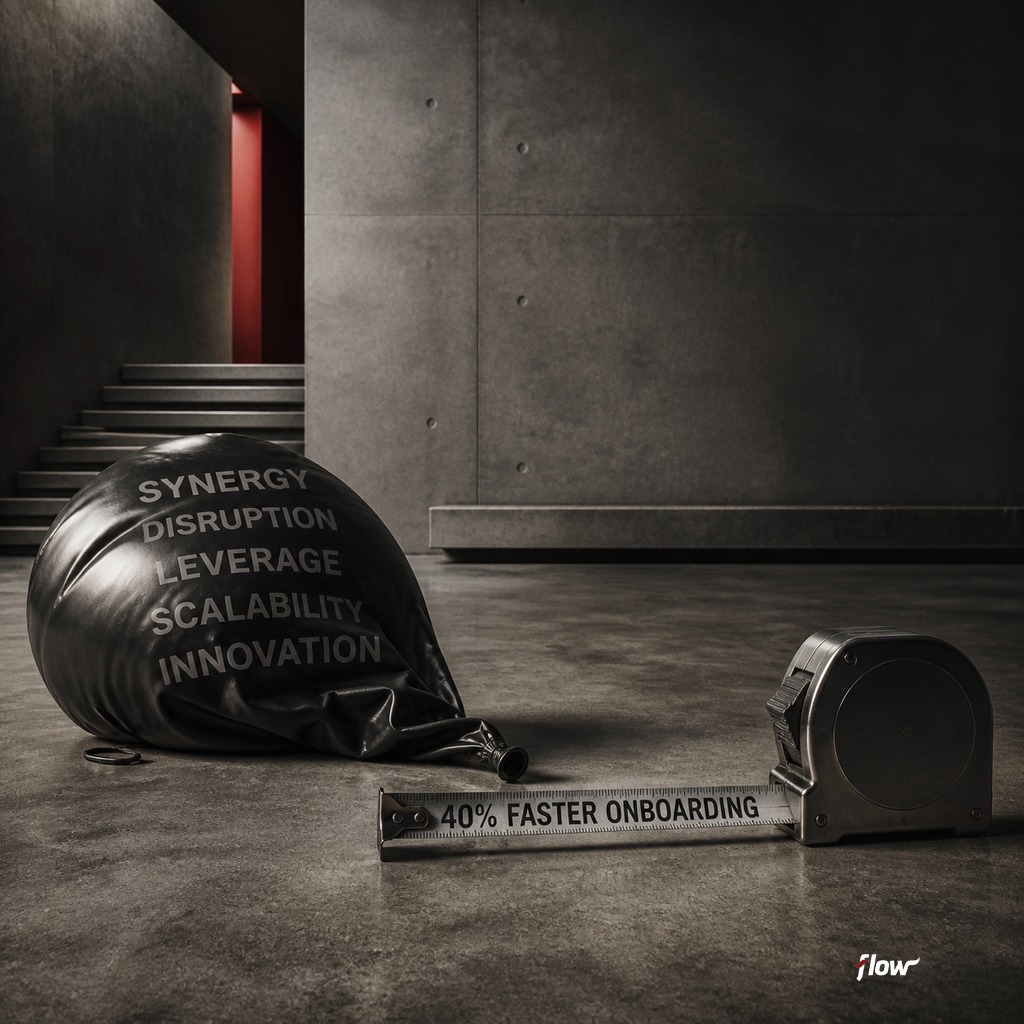
Most B2B service pages lose deals in the first few seconds. Not because the offer is weak, but because the language is vague. Buyers do not want more claims. They want clarity, proof, and a reason to keep reading.
These seven words show up everywhere on service pages, and they usually create more noise than trust.
1. Solutions
This word is so broad it tells the buyer almost nothing. Every vendor says they provide solutions. That is not positioning.
Say what you actually do: reduce manual work, improve response times, speed up reporting, or cut errors. Specific beats generic every time.
2. Innovative
Buyers do not buy because you call yourself innovative. They buy when they see a practical result.
If your service uses AI or automation, describe the business outcome:
- Less time spent on repetitive tasks
- Fewer handoffs between teams
- Faster execution with fewer mistakes
3. World-class
This is a claim with no evidence. It sounds polished, but it does not help a buyer compare you to anyone else.
Replace it with proof points: years in operation, number of deployments, industries served, or measurable results.
4. Leading
Like world-class, this word asks the reader to trust you without context. Strong service pages do not ask for blind trust. They show why you matter.
If you are leading in a niche, name the niche. If you are strong at a specific workflow, say so directly.
5. Seamless
“Seamless” has become filler. Buyers have heard it so often that it barely registers.
Explain the integration instead. Tell them what connects, what changes for the team, and which systems you support.
6. Cutting-edge
This word often signals hype. Executives want dependable systems, not marketing language that overpromises.
Good B2B writing does not sound impressive. It sounds useful.
7. Customized
Almost every service is customized to some degree, so the word adds little value.
Be specific about what changes for the client:
- Workflow design
- Approval logic
- Reporting outputs
- System integrations
Write for the buyer, not the brand
A strong service page answers three questions fast: What do you do? What changes for the business? Why should we trust you?
If a word does not help answer one of those questions, remove it. Clear language shortens sales cycles and makes your service easier to buy.